☰
Close ×
  • Home
  • About
    • About Lotus
    • Our Staff
    • Gemology Lectures
    • Latest Lectures
    • Thanks
    • Site Map
    • Trade Memberships
  • Reports
    • Lotus Report Verification
    • Report Lookup Guide
    • Reports & Prices
    • Color Types
    • Enhancements
    • Testing FAQs
  • Resources
    • Articles
    • Books
    • Hyperion • Inclusion Search
    • Sherlock • Inclusion Research
    • Siamese Twins • Paired Images
    • Four Treasures • Reference Database
    • Book/Instrument Reviews
    • Fine Images for Sale
    • Lotus Bibliography
  • Contact

Lotus Gemology Logo

  • Home
  • About
    • About Lotus
    • Our Staff
    • Gemology Lectures
    • Latest Lectures
    • Thanks
    • Site Map
    • Trade Memberships
  • Reports
    • Lotus Report Verification
    • Report Lookup Guide
    • Reports & Prices
    • Color Types
    • Enhancements
    • Testing FAQs
  • Resources
    • Articles
    • Books
    • Hyperion • Inclusion Search
    • Sherlock • Inclusion Research
    • Siamese Twins • Paired Images
    • Four Treasures • Reference Database
    • Book/Instrument Reviews
    • Fine Images for Sale
    • Lotus Bibliography
  • Contact
    • REPORT VERIFICATION

Articles

From Baoshi to Fei Cui — Qing-Burmese Gem Trade, c. 1644–1800

From Baoshi to Fei Cui — Qing-Burmese Gem Trade, c. 1644–1800

SUN Laichen
First Published: 18 May 2026

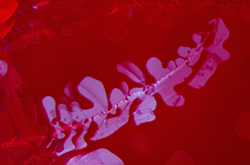
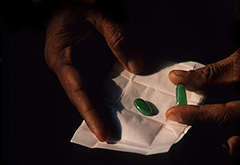
This article traces the shift in Sino–Burmese gem exchange from a Ming-era emphasis on baoshi (寳石; rubies, sapphires, tourmalines and others) to the Qing embrace of Burmese jade, or fei cui (翡翠). Using Yunnan-centered sources, it argues that the term fei cui was first applied to Burmese jade in 1719 (Ni Tui), marking a conceptual turn that paralleled a market one: by the late 18th century, fei cui trade through Tengyue/Dali expanded rapidly, values soared, and top fei cui surpassed Xinjiang yu (nephrite) in price. Court taste—especially under Qianlong—accelerated demand, reorienting extraction and commerce in northern Burma. The study highlights evolving terminology, monopolies over ruby/sapphire, and growing jade-working industries, concluding that Chinese consumer preference was the primary external force shaping Burmese gem mining and exports from the Yuan–Ming through the Qing and into the modern era.
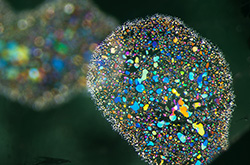
Thin films in Russian emerald

Blooming Bouquet: Thin Films in Russian Emerald

E. Billie Hughes
First Published: 3 February 2026

Thin films create a bouquet of color inside a Russian emerald.

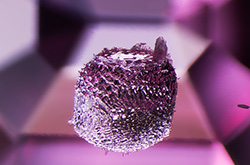
metal sulfide crystal in spinel

Metal Sulfide in Spinel

E. Billie Hughes
First Published: 3 February 2026

A strikingly textured crystal is suspended within a pink spinel.

A heated flux synthetic ruby tested by Lotus Gemology.

Con-juring Ruby — A Heated Flux Synthetic

E. Billie Hughes and Kaylan Khourie
First Published: 1 July 2025

Distracting features in this ruby could easily cause gemologists to misidentify the stone. Learn more about how we unmasked this tricky synthetic.

 
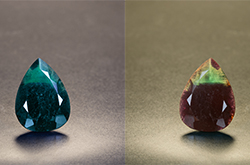
An Alexandrite-Emerald Intergrowth, Reportedly from Russia

An Alexandrite-Emerald Intergrowth, Reportedly from Russia

Kaylan Khourie
First Published: 1 July 2025

Although many emerald deposits also produce alexandrite, particularly those formed in association with mica-rich schist, it is rare that both gems are found in such a close association that they can be fashioned into a single stone. This article details the examination of one such piece, reportedly originating from a deposit in Malysheva, Russia.

Discussion of gem treatment disclosure and its somewhat difficult history.

'Accurate Improv' — A Bit of ChatGPT Gold

Richard W. Hughes
First Published: 1 June 2025

The following is a genuine conversation the author had with ChatGPT in May 2025. It provides a cautionary tale regarding the application of artifical intelligence without proper fact checking.

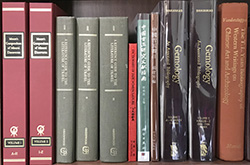
Reference Books on Gemology, Jewelry and Mineralogy

Reference Books on Gemology, Jewelry and Mineralogy

Richard W. Hughes
First Published: 10 April 2025

A curated list of the most important reference books on gems, gemology, jewelry, mineralogy and allied fields aimed at gemologists, book collectors and researchers.

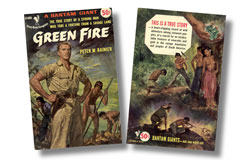
Green Fire | Collecting Books on Emerald

Green Fire — Lotus Gemology's Guide to the Literature of Emerald

Richard W. Hughes
First Published: 1 April 2025

Welcome to the world of green fire — a curated list of the most important reference books and papers on emeralds from around the world, including Colombia, Russia, Zambia, Brazil, Zimbabwe, Afghanistan, Pakistan, and more.

Detecting Corundum Fillers with the Long-Wave UV Torch

Detecting Corundum Fillers with the Long-Wave UV Torch

E. Billie Hughes
First Published: 1 June 2024

There are many benefits to using a long-wave UV torch when testing ruby and sapphire. Here are a few examples.

Discussion of gem treatment disclosure and its somewhat difficult history.

Gem Treatment Disclosure — Notes from the Eastern Front

Richard W. Hughes
First Published: 1 March 2024

Discussion of gem treatment disclosure and its somewhat difficult history.

Results 11 - 20 of 118 Page 2 of 12
  • 1
  • 2
  • 3
  • 4
  • 5
  • 6
  • 7
  • 8
  • 9
  • 10

LOTUS GEMOLOGY CO. LTD.
Silom 19 Bldg,
Suite 411, 4th Fl.
45/1 Soi 19, Silom Rd
Bangkok 10500, Thailand

+66 (02) 117 3616
+66 (0)9 9229 8646

  • facebook
  • instagram
  • HOME PAGE
  • ABOUT LOTUS
  • GEMOLOGY REPORTS
  • CONTACT LOTUS
  • BOOKS
  • ARTICLES
  • LECTURES
  • IMAGES FOR PURCHASE
  • REPORT LOOKUP
  • HYPERION INCLUSION DATABASE
  • SHERLOCK INCLUSION RESEARCH
  • FOUR TREASURES REFERENCE DATABASE

  • Memberships  •  Privacy Policy  •  Site Map
    © 2013–2026 Lotus Gemology. All Rights Reserved.