
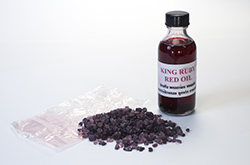
Oiled Spinel & Tanzanite — Shocking Revelations
When a red spinel and a tanzanite were submitted for testing, oil was found in the fissures. Removal of the oil resulted in a startling deterioration in clarity.
When a red spinel and a tanzanite were submitted for testing, oil was found in the fissures. Removal of the oil resulted in a startling deterioration in clarity.
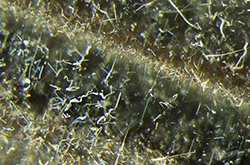
A large black star sapphire was brought in for testing. Two large pits on the base were carefully filled with brown dopping varnish. After removal of the varnish with alcohol, it was found that a large portion of the base had been filled with a lead glass.
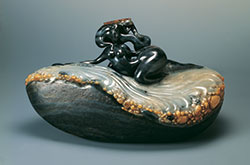
The word "jade" often evokes the green jadeite used in jewelry. However, some of the most valuable jade in China is not this green jadeite, but in the creamy "mutton fat" carved nephrite from Hetian, Xinjiang province. In the past, many carvings touched upon familiar motifs like dragons or religious symbols, while in recent decades there has been a revolution of carving, with artists incorporating modern themes and styles into their work. Lin Tze-Chuan, an influential collector and patron of many jade carvers, is considered by many to be the father of Chinese contemporary jade carving. Here he discusses the changing world of jade carving and what he looks for when commissioning new work.

A discussion of the literature of jade, with particular emphasis on the most collectable books covering both Chinese jade and jade around the world.
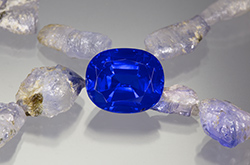
The world sapphire market has changed dramatically in the past 40 years. The authors review the famous sources of the past and look at the current situation in sapphire around the globe.
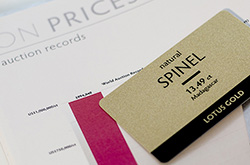
How does one go about choosing a good gem testing lab? The gemologists at Lotus Gemology provide the following guide to help customers make the best decisions when choosing a good gem testing lab.
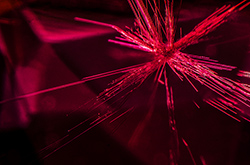
To the jeweler, spinel is famous for its vivid colors. But for the gemologist, this gem is unlike any other. Its extreme hardness allows a fine polish. Couple this with single refraction, which eliminates the image blurring found in most other gems, and a varied landscape of inclusion subjects, and the result is an unparalleled canvas of delight for the photomicrographic artist.
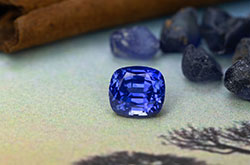
Madagascar has become one of the world’s top sources of fine blue sapphire in recent times. In addition to beautiful untreated material, increasing numbers of treated stones have appeared in the market. Some have been heated to relatively low temperatures, below 1350°C, to lighten their color. To help separate unheated and heated Madagascar sapphire, the authors performed experiments to document the changes they undergo with low-temperature heat treatment in air, which is an oxidizing atmosphere.
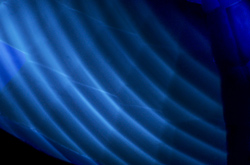
Short-wave fluorescent illumination provides a useful tool to spot curved banding in flame-fusion synthetic sapphire.
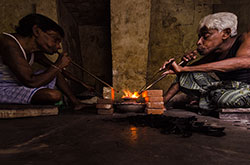
27 February 2019: Sapphires heated with high temperatures and low pressures (~1kbar) first entered the market in 2009, becoming more common since 2016. This article examines the process in detail and looks at the question of whether a separate disclosure is needed for the treatment.